
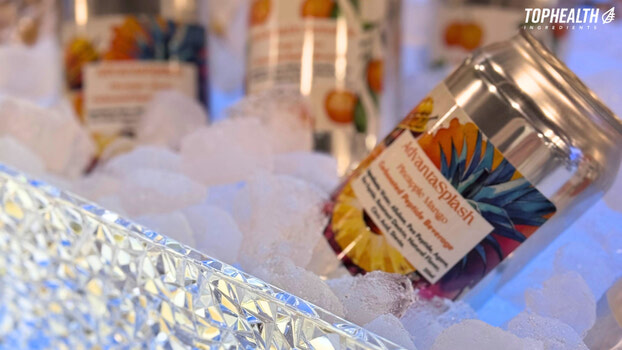
Protein peptides are gaining attention across the food and beverage industry as brands look for more flexible ways to deliver protein in innovative formats, such as clear protein beverages.
At the same time, the term “peptides” is often associated with pharmaceutical or injectable products, creating confusion around what peptides actually represent in a formulation context.
In food and beverage applications, protein peptides are hydrolyzed proteins designed to improve functionality, usability, and performance in finished products.
What Are Protein Peptides?
Protein peptides are short chains of amino acids derived from intact proteins.
They are created by breaking down larger protein structures into smaller segments, resulting in ingredients that retain the nutritional foundation of protein while offering different functional properties.
Because of their reduced molecular size, protein peptides behave differently than intact proteins in formulation systems, particularly in liquid applications. In intact proteins, long amino acid chains tend to fold and interact with one another, which can lead to challenges such as limited solubility, increased viscosity, and visible haze in finished products. Protein peptides, by contrast, are shorter and more uniformly dispersed in solution.
This structural difference results in:
- Improved solubility compared to intact or partially hydrolyzed proteins, especially in cold water systems, due to reduced molecular complexity
- Lower viscosity contribution, allowing for higher protein inclusion without a thick or heavy mouthfeel
- Reduced aggregation, which helps minimize sedimentation and instability over shelf life
- Improved clarity potential, making them more suitable for clear or lightly colored beverages
- More consistent dispersion, reducing processing challenges during mixing and manufacturing
These differences make hydrolyzed proteins particularly effective in applications where traditional proteins can limit formulation flexibility, especially clear beverage systems and RTD protein drinks.

The Difference between Protein Peptides and Protein Isolates
The distinction between proteins and protein peptides is primarily structural.
- Proteins consist of long, complex chains of amino acids
- Protein peptides are shorter chains produced from those proteins through hydrolysis
This structural difference directly impacts formulation performance.
Compared to intact proteins, protein peptides are often:
- More soluble in water-based systems
- Easier to incorporate into clear or low-viscosity beverages
- Less likely to contribute to heaviness or texture challenges
As a result, hydrolyzed proteins are increasingly used in applications where traditional protein formats create limitations.
The Functional Role of Protein Peptides in Formulations
Protein peptides are not simply a variation of protein. They work as a formulation tool. Their properties allow formulators to address common challenges associated with protein fortification, particularly in beverage systems.
Depending on the source and processing, protein peptides can help:
- Improve solubility in ready-to-drink (RTD) and powdered beverage systems
- Enable clearer protein beverages with reduced haze
- Support higher protein inclusion in low-viscosity formats
- Deliver more consistent dispersion and stability
- Reduce formulation constraints associated with intact proteins
These characteristics make hydrolyzed proteins particularly relevant in applications where clarity, drinkability, and process efficiency are critical.

Food-Grade Protein Peptides vs. Injectable Peptides
Distinguishing between food-grade protein peptides (hydrolyzed protein) and injectable peptides is essential.
In food and beverage applications:
- Protein peptides are derived from dietary protein sources such as pea, rice, and soy
- They are manufactured under food-grade standards and intended for use in foods, beverages, and nutritional products
In contrast:
- Injectable peptides are pharmaceutical or research compounds
- They are designed for medical or experimental use and are subject to entirely different regulatory frameworks
For formulators, protein peptides should be understood as functional food ingredients derived from hydrolyzed proteins, not as pharmaceutical compounds or injectable peptides.
Why Protein Peptides Are Relevant in Today’s Market
The shift toward protein-forward products, particularly in beverages, has introduced new formulation challenges.
Traditional proteins (i.e., protein isolates) can create limitations related to:
- Solubility
- Texture and viscosity
- Clarity in finished products
Protein peptides offer an alternative approach by maintaining protein content while improving formulation flexibility, which aligns with broader industry trends, including:
- Growth in ready-to-drink and functional beverage formats
- Demand for higher protein content without compromising sensory experience
- Increased focus on multifunctional ingredients
- Growth in high-protein beverage formulation and wellness drink categories.

Key Sources of Plant-Based Protein Peptides
Plant-based protein peptides, such as pea, rice, and soy, are designed to perform in applications where traditional proteins (i.e., protein isolates) often fall short.
As hydrolyzed proteins, they are light, highly soluble, and able to disperse clearly in liquid formulations, making them particularly effective in beverages.
Protein peptides are typically:
- Transparent or lightly colored in solution
- Low in viscosity, even at higher inclusion levels
- Stable across a range of conditions, including acidic beverage systems
- Suitable for formats where clarity and drinkability are critical
These characteristics make protein peptides particularly well-suited for clear protein beverages, such as protein sodas and protein waters, as well as hydration and sports nutrition drinks where solubility and drinkability are critical.
They also perform well in functional and non-alcoholic wellness beverages, including systems that combine gut health ingredients or fiber with protein. In addition, their flexibility supports use across a range of convenient formats, such as ready-to-drink products, stick packs, and shot-based applications.
Hydrolyzed proteins can help enable formats that are difficult to achieve with traditional proteins, particularly when balancing protein content with sensory and stability requirements. At the same time, these use cases represent only a portion of what is possible.
While pea, rice, soy, and yeast protein peptides share many functional similarities, there are important formulation-level differences to consider.
- Pea protein peptides are typically the least bitter of the three and offer excellent solubility, with a more neutral sensory starting point. They also provide an allergen-friendly option and can be used in combination systems to balance cost and performance.
- Rice and soy protein peptides can introduce more pronounced bitterness and a slight color (amber hue), which may require additional formulation work depending on the application.
- Soy and rice protein peptides may also contribute more foaming, which can be a consideration during processing and in finished product performance.
- Yeast protein peptides offer more than 21% BCAAs, 2% dietary fiber, and an excellent PDCAAS.
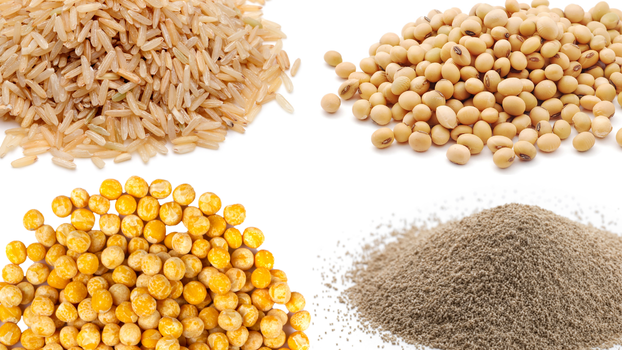
All of our protein peptides offer 80-90% protein content, allowing for lower inclusion levels to achieve the same protein targets.
As is typical with hydrolyzed proteins, all protein peptides can exhibit mild to moderate bitterness depending on inclusion level, making flavor system design an important part of successful formulation.
Protein peptides can also be incorporated into a wide range of other systems, depending on the formulation goals, including powdered beverage mixes, hybrid protein systems, and products designed to deliver targeted functionality alongside protein content. The optimal approach often depends on how peptides are combined with other ingredients, such as fibers or sweeteners, and how the overall formula is designed.
As product formats continue to evolve, protein peptides are becoming a more flexible tool for formulators looking to expand beyond traditional protein applications.
Evaluating where peptides fit best — and how to optimize their performance — requires a formulation-specific approach. Top Health Ingredients works directly with formulators to identify the right peptide solutions based on application, sensory targets, and processing requirements.
Formulators exploring new ways to incorporate protein peptides into their products are encouraged to connect with our team to assess where these ingredients can deliver the most value.
90% soy protein sourced from non-GMO soybeans with a pleasant, neutral flavor, smooth texture & dynamic functionality
80% organic rice protein carefully crafted to blend seamlessly into formulations, with no gritty or chalky texture.
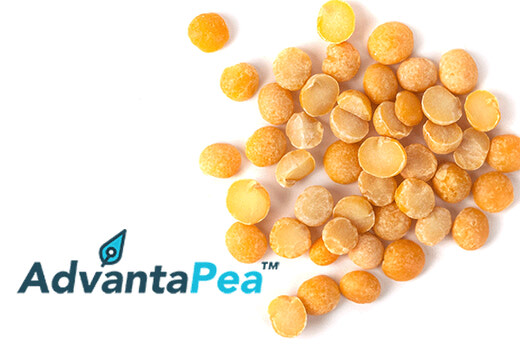
80-85% yellow pea protein that features a complete amino acid profile and a neutral, easily-masked flavor.
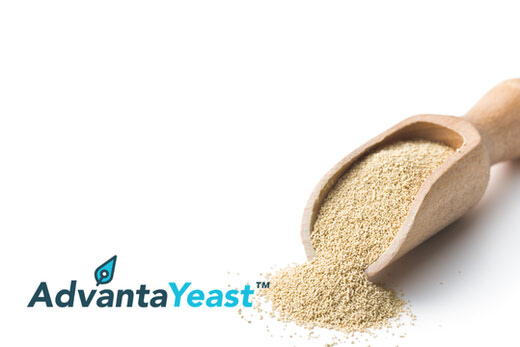
80% fermentation-derived complete protein with an excellent PDCAAS score, rich amino acid profile, and a neutral, clean flavor.